vigorbuy Wide-Fit Walking Shoe Size Guide
vigorbuy Wide-Fit Walking Shoe Size Guide
vigorbuy Wide-Fit Walking Shoe Size Guide
Wide feet buy walking shoes, the easiest place to make a mistake is not just looking at shoe size, but mistaking "shoe length fits" for "the whole shoe fits." Toe box space, forefoot width, upper wrapping, toe movement range, and heel stability all affect comfort during long walks.
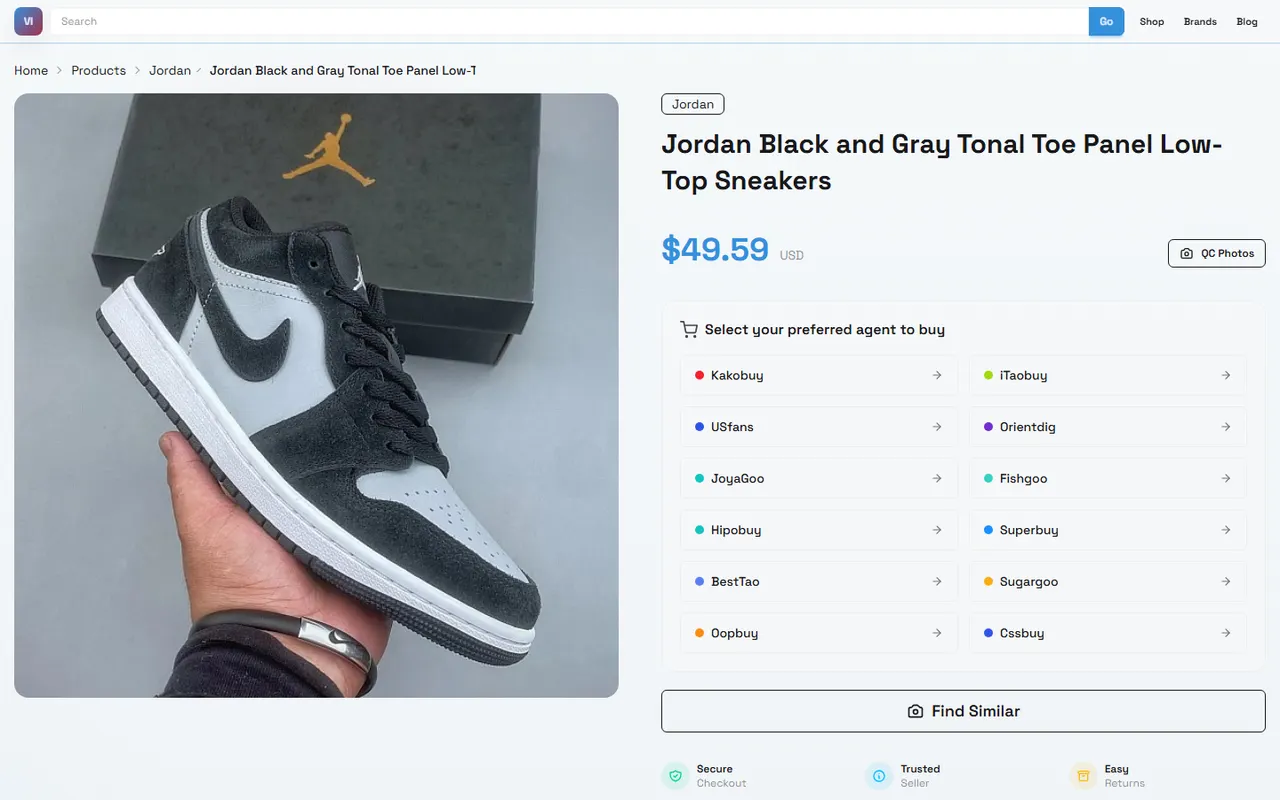
This article revolves around the task of checking size and fit on the vigorbuy product page, helping you establish a reviewable foot shape record before ordering, and after receiving the shoes, judge whether the forefoot is compressed, whether the toes are pressing against the front, and which information is insufficient to directly conclude that the shoes fit. This article does not claim that the editor personally purchased, tried on, or received the shoes; specific prices, inventory, size charts, shipping, and return/exchange conditions should be based on the information displayed on the product page on the day you view it. 🥿
First Identify the Specific Discomfort of Wide Feet During Walking
"Wide feet" do not only have one presentation. Some people have normal foot length but a wider forefoot; some have a big toe or little toe that deviates outward, making one side of the shoe more likely to rub; others have a high instep, where the problem mainly comes from the upper height rather than the sole width.
Before ordering, clearly describe the discomfort location:
Does the big toe touch the front of the shoe?
Is the outer side of the little toe pressed by the upper or side?
Is there obvious indentations at the widest part of the forefoot?
After walking for a while, do the toes need to curl to maintain stability?
Is the instep compressed by the lacing area?
Does the heel slide up and down when lifting the foot?
Is there a significant difference in length or width between the left and right feet?
If your past problem with regular shoe sizes is mainly toe pressing, prioritize checking the toe box length and shape. If the main problem is pressure on both sides of the forefoot, focus on width, last, and upper material. If the problem is concentrated on the instep, simply increasing the shoe size may lead to excessive length without solving the insufficient upper height. 👣
What Size and Fit Clues the vigorbuy Product Page Can Provide
When looking at walking shoes on the vigorbuy product page, first record the content clearly displayed on the page, and do not replace the current product information with size charts from other products or stores. Even if different shoe models are marked with the same size, the toe shape, upper structure, and internal space may differ.
Prioritize checking the following information:
Does the page provide a foot length to size conversion chart?
Is the forefoot width, upper width, or wide version indicated?
Does the shoe come in multiple width options, not just multiple length sizes?
Does the page describe the upper, sole, or lining material?
Can the product images show whether the toe is round, oval, pointed, or clearly narrowed?
Are the laces, Velcro, or elastic opening adjustable?
Does the page show stock, estimated shipping, delivery range, and return/exchange conditions?
Does the size chart correspond to the current product, not a recommended product or general category?
If the page only shows EU, UK, or US sizes without foot length conversion, you cannot directly convert based on your usual habit. Especially when you are between two sizes, first confirm the sizing system used on the page, and then check if there is foot length data available. Dynamic information on the product page should be rechecked on the day of ordering, and keep necessary page records for later handling of size issues. 🔎
Toe Box Space, Forefoot Width, and Toe Movement Range
The toe box space of wide-fit walking shoes should be judged from at least three directions: length, width, and height.
In terms of length, the toes should not continuously press against the front when standing. Measure while wearing the socks you plan to use, and measure in the afternoon or after standing for a long time, because foot size may be larger than in the morning. There should be a margin between the longest toe and the front of the shoe to allow foot movement forward during walking, but too much margin will increase heel slippage and foot sliding forward.
In terms of width, observe whether the widest part of the forefoot falls on the wider area of the sole. The toe looking wide does not mean the internal forefoot is necessarily wide; some shoes only have a loose external upper shape, but the internal last may still narrow near the metatarsophalangeal joints. After putting on the shoes, the toes should be able to spread naturally, not squeezed together or forced to overlap.
In terms of height, the toes should not continuously press against the upper when moving upward. For people with high insteps, insufficient upper height may cause numbness or indentations faster than sole width. After lacing tightly, gently lift the toes to feel if the upper immediately presses on the toes and forefoot.
A simple judgment before ordering: toes need space, forefoot needs support, heel needs stability. Only increasing the shoe size usually only increases length, and does not necessarily increase forefoot width or upper height simultaneously.
How Wide Feet Distinguish Upper Width from Last Shape
Upper width and last shape are often confused. The upper is the outer structure wrapping the foot, while the last is closer to the internal molding space of the shoe. Even if the upper material is soft, if the internal last is narrow in the forefoot, pressure may still occur when wearing.
Preliminary judgment can be made from the following angles:
Does the toe outline maintain a relatively natural width on both sides of the big toe and little toe?
Does the forefoot of the sole expand significantly compared to the midfoot area?
Do the upper seams, decorative strips, or support pieces cross the widest part horizontally?
Can the lace holes allow appropriate relaxation in the forefoot area while keeping the heel fixed?
Is the shoe opening overly narrowed, causing the foot to be squeezed after entering?
Is the sole outline in the picture basically consistent with the upper outline?
Product images can only help observe the external shape, cannot prove the actual internal width, and cannot replace the size chart and post-receipt try-on check. For wide-foot buyers, the most valuable information is usually the foot length data, width description, last description, and return/exchange conditions of the current shoe model, not just promotional words like "comfortable," "lightweight," or "loose."
Establish Size Records Using Foot Length, Foot Width, and Sock Thickness
It is recommended to establish a size record specific to the current shoe model before ordering. Prepare a piece of paper, a ruler or tape measure, and the socks you plan to wear with the walking shoes.
Steps are as follows:
Wear the planned socks, stand with one foot on the paper.
Keep natural body weight, have another person mark the backmost point of the heel and the frontmost point of the longest toe.
Measure the length of both feet, and use the longer foot as the main reference.
Measure the widest part of the forefoot, not just the insole or instep width.
Record sock thickness and usage scenario, such as thin daily socks, athletic socks, or thick cold-weather socks.
Compare the measurement results item by item with the size information displayed on the current vigorbuy product page.
If the page does not have corresponding width or foot length information, confirm with the seller first, and do not apply data from other shoe models on your own.
Record Item | Content to Fill In | Purpose |
|---|---|---|
Longer foot length | e.g., measurement value and date | Determine internal length margin |
Forefoot width | Widest part measurement and left-right difference | Determine if wide version or wider last is needed |
Sock thickness | Thin socks, athletic socks, or thick socks | Avoid inconsistency during try-on |
Main discomfort | Toe pressing, pinching little toe, pressing instep, or heel slippage | Select parameters to check first |
Product page evidence | Size chart, width description, and return/exchange conditions | Keep as basis for ordering |
When recording, do not just write "usually wear a certain size." Different brands, sizing systems, and lasts cannot be directly equated. If there is a significant difference between left and right feet, prioritize ensuring enough space for the larger side, and check if the smaller side needs lace adjustment to reduce slippage.
After Receipt, Check Forefoot Compression, Toe Pressing, and Heel Slippage
The first check after receiving should be done indoors on a clean, flat surface, wearing the socks you actually use. Do not go for a long outdoor walk right away, because wear, stains, or sole marks may affect subsequent return/exchange judgment. 📦
First do static checks:
When standing, can the toes spread naturally?
Does the longest toe continuously touch the front of the shoe?
Are there concentrated pressure points on both sides of the forefoot?
Does the upper form obvious indentations on the instep?
Does the sole forefoot cover the widest area of the foot?
Then do short-distance dynamic checks:
During normal walking, do the toes slide forward and hit the shoe front?
When turning, does the forefoot spill over the sole edge or become noticeably unstable?
When lifting the foot, does the heel repeatedly slip out of the shoe opening?
When going downhill or decelerating, are the toes forced against the front?
Do the left and right feet show different degrees of compression or slippage?
If it's just that the laces are not adjusted properly, first change the lace tightness, then re-observe. If the forefoot is continuously compressed on both sides, the toes cannot spread, or the heel slips significantly, you should not rely solely on "it will loosen after wearing a few times." The upper may adapt slightly, but the last length and basic width will not fundamentally change after a short try-on.
When Information Is Insufficient, You Should Not Directly Conclude the Shoes Fit
In the following situations, it is recommended to pause ordering or confirm with the seller first:
The current product does not have a clear size chart.
The size chart does not indicate length units or applicable sizing system.
The page only says "wide version" or "comfortable," without width, last, or foot shape description.
Product images show multiple versions, but the page does not explain size differences between versions.
Return/exchange conditions do not clearly state try-on range, time limit, or applicable region.
You are between two sizes, and the page does not provide foot length or width basis.
There is a significant difference between left and right feet, but the product has no adjustable laces or upper structure.
You need orthotic insoles, thick socks, or special support, but cannot confirm the internal shoe space.
Do not use a single size experience from reviews to replace objective information about the current product. Other buyers' foot length, foot width, sock thickness, and walking habits may be completely different from yours. If reviews do not provide clear measurement data, they can only be used as clues to verify, not as a guarantee of fit.
Action Checklist for Wide-Foot Buyers: Ordering and Returns/Exchanges
Before ordering:
Measure left and right foot length and forefoot width.
Measure while wearing the socks you plan to use.
Record the most common discomfort locations in the past.
Check the sizing system and size chart on the current vigorbuy product page.
Check if the page explains width, last, upper structure, and adjustment methods.
Read the current shipping, return/exchange, and after-sales conditions.
Record the verification date for price, inventory, shipping cost, and timeliness information, and do not treat old page information as current promises.
After receiving:
Keep the shoe box, tags, and packaging, and try on indoors first.
Wear the socks you actually use to check standing and short-distance walking.
Record forefoot compression, toe pressing, instep indentations, and heel slippage.
Take clear records that show the shoe model, size, and problem locations, but do not publicly disclose order number, phone, address, or payment information.
If return/exchange is needed, follow the current process and time limit displayed on the product page.
The final judgment should not only ask "Is this shoe wide?" but "Does it provide enough space under my foot length, forefoot width, instep height, and sock conditions, while maintaining heel stability?" If the product page lacks key size information, the safest action is not to guess a larger size, but to fill in the information first. This may take a little more confirmation time, but it can reduce return/exchange costs, waiting time, and the risk of re-purchasing due to size mismatch.
agent platform shopping FAQ
1. When browsing spreadsheets on vigorbuy-spreadsheet.net, will my personal data be collected?
vigorbuy-spreadsheet.net does not collect any personal data; it is only a product catalog display site for the agent platform, and all transactions are conducted on the agent platform.
Browse our latest products and find your next favorite item.