vigorbuy Shoes for Long Standing
vigorbuy Shoes for Long Standing
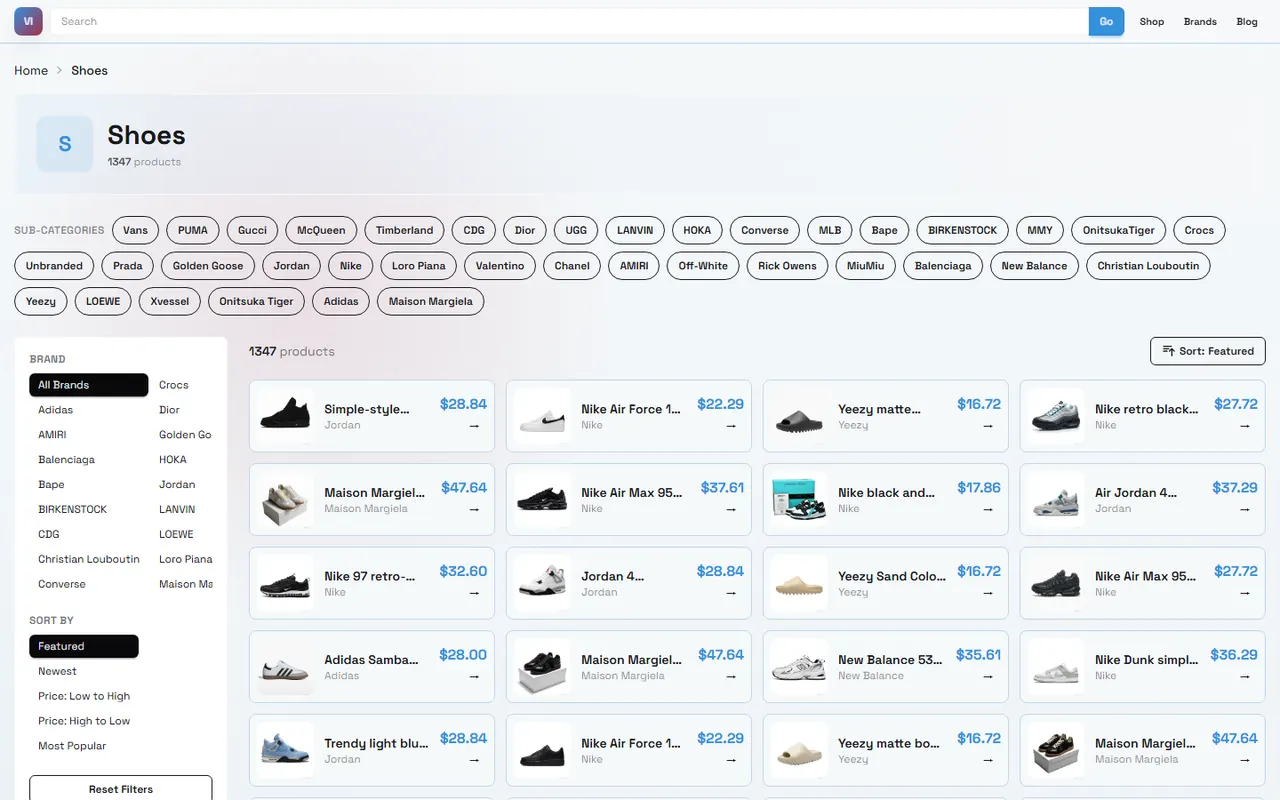
Long-standing commute shoes cannot be judged solely by appearance or "softness." Offices, retail stores, front desk services, and jobs that require frequent walking have different shoe requirements: some need more impact relief for the feet, some emphasize sole stability, and others must switch between standing and short-distance fast walking.
This article focuses on a specific task: when viewing shoes on vigorbuy-spreadsheet.net, how to compare cushioned shoes, walking shoes, and lightweight training shoes, and perform initial screening based on your work scenario. After reading, you should be able to record shoe evidence, exclude unsuitable structures, and decide after receiving the shoes whether to continue trying them on, seek additional consultation, or request a return or exchange.
This article does not apply to situations requiring medical diagnosis, orthotic prescriptions, or treatment of foot conditions. Foot pain, numbness, noticeable swelling, or persistent discomfort should be addressed by consulting appropriate medical professionals, not just by changing shoes.
Verification note: This article only proposes a screening framework based on publicly verifiable product page fields and general shoe assessment methods. Prices, inventory, sizes, materials, sellers, shipping, taxes, return/exchange conditions, and page link status may change; please verify again on the target product page before purchasing. The verification date of this article is September 15, 2026; if the product page lacks clear fields, record that item as "not provided" and do not speculate. 🧭
Clarify Foot Burden and Duration in Long-Standing Commutes
The burden of prolonged standing usually comes from a combination of factors: continuous standing time, floor hardness, whether frequent turning is needed, whether fast walking is required, and whether the shoes keep the heel stable.
First, record your typical workday:
What is the approximate maximum continuous standing time?
Do you also need to walk long distances or climb stairs daily?
Is the workplace tiled, concrete, wooden, or carpeted?
Do you often turn in place, move laterally, or run briefly?
Where does foot fatigue occur most easily: forefoot, arch, heel, or toes?
Are there uniform, color, or slip-resistance requirements?
If you primarily stand statically on hard floors, cushioning and pressure distribution may be more important; if your standing-to-walking ratio is close, walking shoes are usually a higher priority for comparison; if your work also requires rapid movement, bending, or short training movements, the stability of lightweight training shoes may be more valuable.
"Softer is more comfortable" is not a reliable rule. An overly soft midsole may cause your feet to constantly adjust while standing, and may cause the heel to wobble side to side. Comfort needs to be assessed along with sole stability, heel lockdown, upper space, and individual foot shape.
What vigorbuy Product Information Can and Cannot Prove
When filtering shoes on vigorbuy-spreadsheet.net, the platform pages help buyers organize and compare product information, but the page text itself cannot replace actual try-on. Especially distinguish between "facts explicitly written on the product page" and "buyers' inferences based on images."
Typically, you can check the following:
Product name and specific shoe type
Available sizes and whether the size chart is complete
Whether upper, lining, and sole materials are clearly stated
Visible images of sole, insole, heel, and lace areas
Seller information or product source fields
Currently displayed price, stock, and available colors
Shipping, return/exchange, or after-sales instructions shown on the page
Whether product images are sufficient to observe sole tread, collar structure, and upper stitching
This information can help you form an initial judgment, but cannot directly prove the following:
The shoes are definitely suitable for continuous standing for eight hours
The sole definitely has professional slip-resistant performance
The midsole will definitely maintain elasticity long-term
The upper is definitely breathable or wear-resistant
The shoes definitely meet a brand's authenticity standards
The last in the image definitely fits your foot shape
The size shown on the page will be exactly consistent across batches
If the product page only writes promotional descriptions like "comfortable," "cushioned," or "lightweight," without structural, material, size, or detailed image support, treat these words as clues to be verified, not a purchase conclusion. 🔎
Compare Structural Differences Among Cushioned, Walking, and Lightweight Training Shoes
These three categories can serve as an initial classification, but product names do not always accurately reflect actual structure. The final decision should be based on visible information on the product page and physical inspection after receiving the shoes.
Type | Better suited usage characteristics | Evidence to prioritize checking | Main risks |
|---|---|---|---|
Cushioned shoes | Standing on hard surfaces for longer periods, moderate walking intensity | Midsole thickness clues, sole width, insole space, heel lockdown | Too soft, too high, or lacking lateral stability |
Walking shoes | Alternating between standing and daily walking | Forefoot flex point, sole contact area, collar wrap, weight | Emphasizing lightweight without foot lockdown |
Lightweight training shoes | Requires frequent movement, turning, or short training movements | Sole platform, lateral support, heel stability, upper reinforcement | Sacrificing cushioning or comfort space to reduce weight |
The focus of cushioned shoes is not that the midsole is as thick as possible, but whether they are stable when standing, whether the heel easily slips, and whether the forefoot has enough space. If the sole platform is narrow, a thick soft structure may feel unstable.
Walking shoes need attention to the rocker feel and flex point. The shoe should allow the forefoot to flex during normal walking, but should not easily collapse in the middle. If the page does not show side or flex area images, do not judge suitability for long walking based solely on the shoe name.
Lightweight training shoes usually emphasize movement transition and lateral stability. They may be suitable for jobs requiring short walking and frequent turning, but "training shoes" does not mean suitable for all-day standing. If the sole is too stiff, the upper presses on the instep, or forefoot space is insufficient, continuous wear may not be ideal.
Check Sole Platform, Insole Space, and Heel Lockdown Clues
When viewing a product page, record evidence from bottom to top.
The first step is the sole platform. Observe the width of the sole contacting the ground, clues of heel-to-toe drop, outsole tread, and edge shape. A sole with more uniform width usually provides a more stable ground feel, but image angles can cause misjudgment; you must judge based on side and bottom images.
The second step is the insole and interior space. If the product page provides insole length, internal length, toe box width, or removable insole information, save those fields. If only foot length is given without width information, buyers with wide feet or high insteps should retain uncertainty.
The third step is heel lockdown. Observe collar height, heel cup shape, number of eyelets, and upper wrap area. A heel area that looks soft does not necessarily mean good lockdown; what needs to be confirmed is whether the heel easily lifts when worn, and whether the laces allow fine adjustment.
The fourth step is upper structure. Names like mesh, fabric, synthetic, or leather only indicate material category and cannot alone prove breathability, wear resistance, or waterproofing. If the page lacks visible information on lining, seams, and upper thickness, list these items for post-receipt inspection.
You can use three statuses in your records: "shown," "partially shown," and "not provided." This is easier to review than writing "good" or "bad," and avoids treating image impressions as facts. 📏
Filter by Office, Retail, and Standing Service Scenarios
Office scenarios usually involve alternating sitting and standing, relatively flat floors, and dress codes that may matter more than athletic performance. Prioritize checking sole stability, whether the upper matches easily, whether the collar rubs, and whether the size chart is clear. If you only walk short distances daily, there is no need to sacrifice fit for exaggerated athletic parameters.
Retail or showroom work often includes continuous walking, turning, and standing on hard floors. In this case, compare walking shoes and stable lightweight training shoes in the same group, focusing on sole contact, forefoot flex, heel lockdown, and upper reinforcement. Products that only say "lightweight" without sole details should be given lower priority.
Front desk, food service, nursing, or other standing service positions may have uniform, slip-resistance, cleaning, and long-wear restrictions. If the work environment has liquids, grease, wet floors, or safety regulations, prioritize confirming whether the product page clearly provides corresponding performance statements; ordinary athletic shoe outsole tread is not automatically equivalent to work slip-resistant shoes.
If you need long-distance walking during commutes, also consider foldability, weight, and breathability. If you will proceed directly to strength training or ball sports after work, do not assume that one pair of commute shoes can replace specialized athletic shoes.
Record Size, Upper Material, and Evidence Gaps
It is recommended to create a row for each candidate shoe, at least including: product name, page verification date, target size, foot length, foot width, upper material, sole information, heel structure, missing items on the page, and pre-purchase questions.
Size assessment can follow this order:
Measure both feet; record the longer foot length.
Measure foot width while standing, especially at the widest part of the toes.
Compare measurements with the specific units on the product page size chart.
Confirm whether the size chart corresponds to foot length, internal length, or insole length.
Check if the page states whether the shoe runs large, small, wide, or narrow.
If only vague images or a single size recommendation are provided, do not treat the recommended size as a guarantee of fit.
The toe box should leave enough room for movement, but not so much that the foot slides forward and backward. If one foot is significantly larger than the other, assess based on the larger side, and consider sock thickness and possible slight foot swelling during work hours.
Material records should also be restrained. You can write "page labels fabric upper," not directly "highly breathable"; you can write "image shows mesh area," not directly "suitable for hot environments." Leave attributes without evidence blank and raise them in a consultation list.
Before purchasing, you can confirm with the seller or platform: measurement method for internal length and toe width, whether the insole is removable, sole material, whether the heel is reinforced, whether the current batch matches the images, and return/exchange conditions and deadlines. 💬
Check Shoe Shape, Support, and Workmanship After Receipt
After receiving the product, first complete appearance and size records without affecting return or exchange. Keep packaging, tags, order information, and necessary logistics vouchers, and avoid prolonged outdoor try-on that may leave obvious usage traces at the start.
Inspection items can be divided into four groups:
Shape: Are left and right shoes symmetrical? Is the toe deformed? Is the collar collapsed? Is the sole significantly warped?
Size: Does the physical label match the ordered size? Do the insole length and foot space basically match the page information?
Support: Does the heel slip easily? Does the sole tilt significantly to one side? Does the upper press on the instep or toes?
Workmanship: Are there obvious defects in stitching, glue edges, sole bonding, eyelets, lining, and insole?
Then, you can conduct a short try-on indoors on clean, safe flooring. Observe stability when standing, then normal walking and turning. Do not simulate an entire workday on the first try-on, and do not use lack of pain in a short time as proof of long-term suitability.
If the page claims a certain performance but the physical shoe lacks corresponding structural clues, or if the physical shoe differs significantly from product images, size chart, or material description, take clear records and contact the seller or platform promptly. When saving or submitting order screenshots, waybills, and payment vouchers involving personal information, cover name, phone, address, order number, and payment details. 🛡️
Decide to Try On, Seek More Information, or Return/Exchange Based on Evidence
Candidate shoes can be classified into three categories.
Shoes with sufficient evidence and initial fit can be kept according to platform return/exchange rules, with short indoor adaptation. Continue observing heel slippage, toe pressure, arch fatigue, and sole stability; do not treat page claims as guarantees of long-term performance.
Shoes with incomplete structural information but whose price or appearance warrants further consideration should first be supplemented with inquiries. Focus on size measurement, sole material, insole space, heel structure, and current batch differences. Do not classify them as "verified suitable for long standing" before answers are confirmed.
Shoes with size mismatches, obvious workmanship issues, structural inconsistency with description, or persistent discomfort during wear should be checked for return/exchange windows and required evidence as soon as possible. Whether return or exchange is possible depends on the policies applicable to the product page and platform at the time, and cannot be guaranteed by general experience.
Finally, a simple decision sequence can conclude: first confirm the work scenario, then verify size and structure, then check evidence gaps on the page, and only then compare price and appearance. For long-standing commutes, fit, stability, and verifiability are usually more decision-worthy than a single "cushioning" label. ✅
Browse our latest products and find your next favorite item.